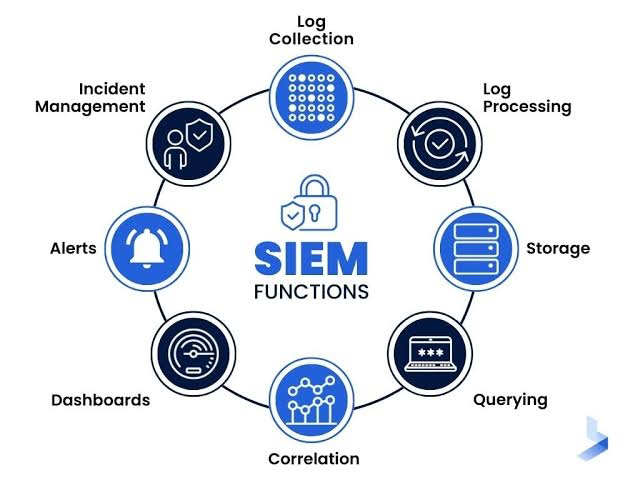
SIEM (Security Information and Event Management) tools are specialized software solutions that collect, analyze, and manage vast amounts of security data. They help security teams identify, investigate, and respond to security threats by monitoring events across an organization's network and systems. Key Features and Functions: Data Collection and Aggregation: SIEM tools gather log data, events, and other security-related information from various sources within the organization, such as firewalls, intrusion detection systems, servers, and applications. Real-time Monitoring and Analysis: They provide real-time visibility into security events and patterns, enabling security teams to quickly detect and respond to potential threats. Threat Detection and Alerting: SIEM solutions use rules and algorithms to identify suspicious activities and generate alerts, notifying security teams about potential security breaches. Incident Investigation and ...
->SQL Server administration encompasses a broad range of tasks, including database design, security, performance tuning, backup and recovery, and monitoring, all aimed at ensuring efficient and reliable database operation. Here's a summary of key SQL Server administration topics: Core Administration Tasks: Database Design and Management: Creating and Managing Databases: Defining database structures, tables, and relationships. Database Design Principles: Understanding normalization, indexing, and schema design for optimal performance and maintainability. Security: User Management: Creating and managing user accounts, roles, and permissions. Data Encryption: Implementing encryption to protect sensitive data. Performance Tuning: Query Optimization: Identifying and resolving performance bottlenecks in SQL queries. Indexing: Implementing indexes to improve query performance. Resource Management: Monitoring and...
Terminologies POWER BI ( BUSINESS INTELLIGENCE) Power BI, a business intelligence tool by Microsoft, has its own set of lingo. Here's a breakdown of some common Power BI terminologies: Data Acquisition and Transformation: 1.Data Source: Where your data comes from, like a database or Excel sheet. 2.Data Transformation (ETL): Cleaning and structuring your data for analysis. 3.Data Gateway: Connects your on-premises data to Power BI for cloud access. Report Building and Sharing: 1.Publish : Sharing reports and dashboards in the Power BI Service (cloud-based platform). 2.App Workspace: A collaborative space to share and develop reports. Data Model: 1.Dimension Table: Contains descriptive data (categories), often linked to a fact table. 2.Fact Table: Stores numerical data for analysis, usually linked to dimension tables. 3.Relationships: Connections between tables based on common fiel...


Comments
Post a Comment